Al dente pasta is pasta cooked until it is tender all the way through but still firm when you bite it. The centre gives a little resistance, and the surface holds its shape rather than going soft.
The phrase is Italian for to the tooth, and it describes a texture, not a time. Below is what it means in practice, how to recognise it, how long dried and fresh pasta take, and why Italian kitchens are so strict about it.
Al Dente Pasta Meaning: Firm to the Tooth
The pasta al dente meaning is literal. When you bite, your teeth should meet slight resistance before the pasta yields, and there should be no chalky white core left in the middle.
So what does al dente pasta mean in a working kitchen? It means the pasta comes off the heat a minute or two before it is fully soft, because it keeps cooking in the sauce and on the plate.
The opposite is pasta that bends limply on the fork, sticks to itself and tastes of nothing but water. Most people who say they do not like pasta have only eaten it that way.
Where the Term Comes From
Al dente is younger than pasta. Recipe books from the 1700s and 1800s cooked pasta for far longer than anyone would now, and the preference for a firm bite grew in southern Italy alongside factory-made dried durum pasta in the nineteenth and early twentieth centuries.
By the early 1900s, the phrase was in everyday use in Naples and Rome, and by the middle of the century it had become the standard against which all Italian pasta is judged. Today an Italian cook who serves soft pasta is not being generous. They are being careless.
Why Italians Cook Pasta This Way
Texture is the first reason. Firm pasta gives the mouth something to do, and a good sauce clings to it instead of sliding off a slippery, over-softened surface.
Starch is the second. Dried pasta is made from durum wheat semolina, and when it is cooked just to the point of doneness, its starch stays partly bound inside the strand. Overcook it, and the starch washes into the water, leaving the pasta soft and the pot cloudy.
Digestion is the third, and it is not a myth. Pasta al dente has a lower glycaemic index than the same pasta cooked soft, because the tighter starch structure is broken down more slowly. It is one reason a plate of pasta in Italy does not feel heavy afterwards.
The fourth reason is the sauce. Pasta pulled early and finished in the pan absorbs the sauce in its last minute of cooking, so the two become one dish instead of a topping sitting on a base.
How to Tell When Pasta Is Al Dente
Ignore the clock for a moment and use your teeth. Two minutes before the packet time, lift a piece out, bite it, and look at the cross-section.
If you see a distinct white or pale dot in the centre, it needs another minute. If the colour is even and it still pushes back when you bite, it is ready. If it is uniformly soft, you have gone past it.
Throwing pasta at the wall tells you nothing except whether your wall needs cleaning. The bite test is the only test that works for every shape.
Al Dente Pasta Time for Dried and Fresh Pasta
For dried pasta, the al dente pasta time is usually one to two minutes less than the packet says. Spaghetti and linguine tend to land around eight to nine minutes; thicker shapes like rigatoni and paccheri take eleven to thirteen.
Fresh egg pasta is different. Tagliatelle takes two to three minutes, and filled pasta such as tortelli or ravioli takes three to four. Fresh pasta will never be firm in the way dried pasta is; al dente here means tender with a little spring, not raw in the middle.
Whatever the pasta, take it out early and finish it in the pan with the sauce for the last minute, adding a splash of the cooking water if the sauce tightens. That final minute is where the dish comes together.
Al Dente Beyond Pasta
The same word is used for risotto rice, which should keep a firm centre under the creamy starch, and for vegetables such as green beans and asparagus, which should still snap rather than bend.
In every case, the meaning is the same: cooked through, still with structure, never mushy. Once you can recognise it in pasta, you will start noticing it everywhere else.
Common Mistakes That Ruin the Texture
Too little water. Pasta needs room to move, or it cooks unevenly and sticks. Use a large pot and plenty of boiling water.
Not enough salt. The water should taste like the sea, roughly ten grams of salt per litre. Salt seasons the pasta from the inside; you cannot add it back afterwards.
Oil in the water. It does nothing to stop sticking, and it coats the pasta so the sauce slides off. Stir during the first minute instead.
Rinsing after draining. Rinsing washes away the surface starch that helps sauce cling. Save a cup of the cooking water and use it to loosen the sauce instead.
Cooking fresh pasta like dried. Fresh egg pasta is done in minutes and turns to paste if you wait for the firmness of dried spaghetti. Watch it, taste it, and pull it the moment it turns tender.
Fresh Handmade Pasta Is a Different Question
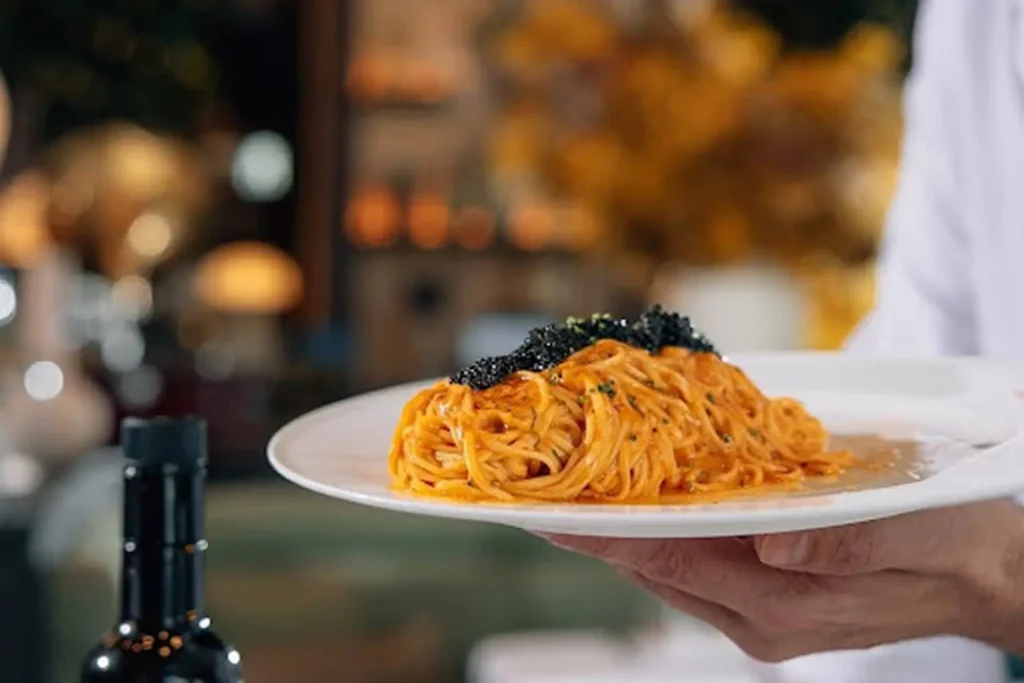
At Mamabella in Downtown Dubai, the pasta is rolled by hand every morning, so most of what leaves our kitchen is fresh rather than dried. Our chefs cook it to the point where it is tender with a gentle bite, then finish it in the sauce so nothing arrives at the table dry.
If you want to taste the difference, order the tortelli tartufo or the culurgiones and pay attention to the first bite. Reserve a table online, or ask for a seat near the open kitchen when you book.
Frequently Asked Question
What is al dente pasta?
Al dente pasta is pasta cooked until it is tender but still firm to the bite, with no raw core. It is the standard doneness in Italian cooking.
What does al dente pasta mean in English?
It translates as to the tooth. The name describes the slight resistance you feel when you bite through properly cooked pasta.
How long does al dente pasta take?
Roughly one to two minutes less than the packet time for dried pasta, and two to four minutes for fresh egg pasta. Test by biting rather than trusting the clock.
Is al dente pasta undercooked?
No. Undercooked pasta has a hard, chalky centre. Al dente pasta is cooked through but still holds its shape and its bite.
Is al dente pasta better for you?
Pasta cooked al dente has a lower glycaemic index than overcooked pasta, so it releases energy more slowly. Portion size and the sauce matter more than the cooking time.