Walk into a restaurant where the kitchen hides behind a door, and you take the food on faith. Walk into one with an open kitchen and the faith becomes sight, because you watch your dinner happen. That difference explains why so many restaurants now cook in full view, and why diners have come to expect it. This post looks at where the idea came from, what it does for guests and for cooks, and how it shapes the room at Mamabella, where guests watch the best handmade pasta in Dubai get rolled, filled, and dropped into the pot.
Where the Open Kitchen Idea Came From
Cooking in front of guests is older than any design trend. Street stalls, trattoria hearths, and counter diners all fed people within arm’s reach of the fire, and nobody called it a concept. The walled-off kitchen came later, with formality.
What changed in recent decades is that formal rooms wanted the honesty back. Chefs moved the pass into the dining room, sushi counters proved guests would happily sit closer, and home renovators followed, which is why a search for open kitchen ideas now returns as many living rooms as restaurants. The restaurant version came first. The houses copied it.
Why Restaurants Cook in Full View
Transparency reassures. A guest who can see ingredients handled, stations wiped, and plates checked stops wondering what happens behind the wall. Researchers call this operational transparency, and a 2024 study in the Journal of Hospitality and Tourism Research found that letting customers watch the labour behind a service changes how they rate the experience, for the better. The date matters here, because it confirms an old restaurant instinct with current evidence.
A second effect gets less attention. Cooks who can see the people they feed work differently, because the plate stops being a ticket and becomes a person. An open kitchen in restaurant design is usually framed as a treat for the guest, when half the benefit lands on the other side of the counter.
What You Get From Watching
Sit near the pass and dinner gains a second act. A closed kitchen cannot give you any of this.
- Timing. You see why al dente pasta means pulling it at a precise moment rather than a rough one.
- Appetite. The smell from the wood oven reaches you before the menu does.
- Education. Watching a dish assembled once teaches more than reading about it twice.
- Company. Solo diners near the counter are never really eating alone.
It is honest theatre. Nothing on that stage can be faked, which is exactly what makes it worth watching.
What Good Restaurant Open Kitchen Design Gets Right
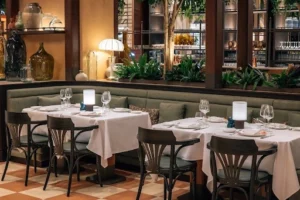
An open line only works when the design does its quiet jobs. The best restaurant open kitchen design manages heat, noise, and sightlines so the show reaches you and the chaos does not.
- Ventilation strong enough that you smell dinner, not smoke.
- A pass that faces the room, so every plate gets its final check in public.
- Seats close to the action for guests who want the front row, and distance for guests who do not.
- Light on the food, not in your eyes.
Modern open kitchen design also borrows from homes now, warm materials and low partitions instead of steel walls. When it is done well, you stop noticing the design at all and just notice dinner.
The Open Kitchen at Mamabella
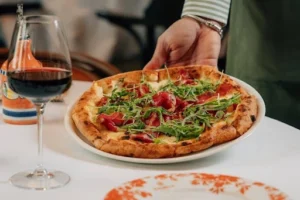
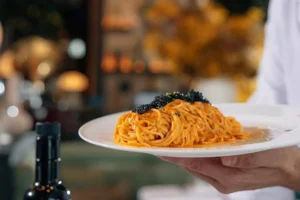
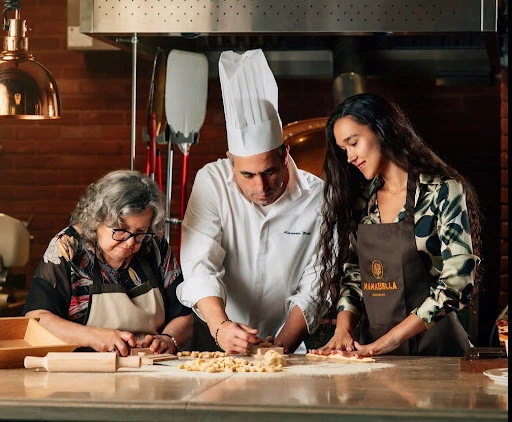
Ours sits in the middle of the room, with the wood-fired oven glowing at one end, so the pizza restaurant in Dubai moment happens in full view every few minutes. Pasta made by hand each morning gets finished in the evening, where guests can watch.
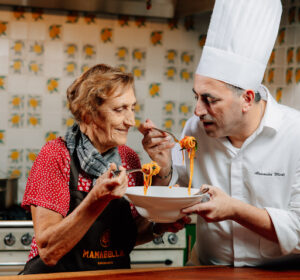
Then there is the table no other restaurant with an open kitchen in the city can copy. Each month a visiting Italian grandmother cooks her own recipes at the Mamma Studio, a 12-seat table with its own stove and the heart of our Cucina Mamma tradition. Watching a nonna cook is the idea taken to its logical end. Not a chef performing, a grandmother feeding you.
Who Loves It, and Who Should Sit Further Back
Front-row seats suit the curious, food-obsessed guests, kids who want to see the fire, and anyone dining alone, because the energy near the pass becomes part of the meal.
It is not for everyone, and that is fine. A first date that needs quiet, or a work conversation that needs privacy, belongs at a table further from the action. Ask for a calmer corner when you book, and you get the food without the soundtrack. The room is big enough for both kinds of evening.
Dinner, With the Curtain Up
An open kitchen is a promise made in public, because cooking badly in front of people is not an option. That is exactly why kitchens that cook well keep nothing hidden. Come watch ours keep the promise.
Reserve at Mamabella on +971 4 430 8999 or at reservations@Mamabella.co; look through our menu first, or ask anything on our contact page for reservations and questions.